No one walks into their home and says, “You know what, let’s just bulldoze the whole thing and start again.” That’s not usually how it happens…
It starts with smaller thoughts, “What if we just move this wall?” “Maybe open this area up?” “We could go up later if we need to…”
And each of those decisions, on their own, feels completely reasonable. But what’s actually happening underneath is something most people don’t see yet.
Because you might think you’re making isolated changes. In reality, you’re starting to reshape a structure… that may not have been designed to be reshaped.
And that’s usually the moment when people should pause and ask themselves how to know if a renovation is worth it before they go any further.
And once you take that first step, every decision after it builds on the assumption that renovating is the right path.
That’s the part that quietly locks people in.
The Question That Actually Matters When Deciding How to Know If a Renovation Is Worth It
Most of the time, yes, you can renovate. That’s not the hard question.
The better question is: does renovating give you the best outcome for what you’re about to spend?
That’s the way I always look at it. Cost effectiveness versus the end outcome. Not just what it costs to do the work, but what you’re actually left with when it’s finished. Because there’s no point spending hundreds of thousands of dollars keeping an old structure alive if, at the end of it, you still have old wiring, old plumbing, poor flow, awkward rooms, and a house that only half works.
Plumbing and electrical have a lifecycle. Most of it sits somewhere in that 40 to 60 year range. So when a home gets close to that point, the conversation naturally starts leaning towards whether rebuilding makes more sense. Not automatically, but it has to be part of the thinking. Because once you start cutting into an older home, you’re not just dealing with what you can see. You’re dealing with the age of the systems behind the walls, under the floors, and through the structure.
Where “Saving the House” Quietly Starts Costing You More
This is where people get caught.
They think they’re renovating a home, but really, they’re trying to build something new around something that may already be at the end of its useful life.
Now, there are situations where preserving part of a home makes sense. If the house has real character, if the memories matter, or if heritage rules mean you don’t have the option to knock it down, then that changes the conversation. Sometimes your hands are tied, and the job becomes about making the best of what you have to keep.
But when part of the house is being kept because it feels like the cheaper option, that’s where problems start.
I’ve seen cases where people try to retain a portion of the home, sometimes because of planning rules, sometimes because they think it will save money. But preserving even a small section can add complexity quickly. You’re working around it, tying new into old, dealing with ageing services and unknown structural issues, and everything that comes with opening up an existing building.
And even after all that effort, that old section still carries the same risks: old wiring, dated plumbing, and problems that don’t go away just because the rest of the house is new.
So what looked like a saving at the start ends up being the part that keeps costing you.
When the Numbers Don’t Match the Dream
(And It’s Too Late to Turn Back Easily)
I’m dealing with a project right now that shows exactly how this plays out. It’s a beautiful heritage-listed sandstone cottage at the front, so that part has to stay. But at the back, there’s an old 1970s addition that really needs to come down. Before coming to me, the owners had already gone through the design process. They’d had a beautiful high-end architectural renovation and extension drawn up of around 180 square metres. On paper, it looks incredible, and you can understand why they got excited about it. It probably felt like the answer.
But when it came time to actually price it, the numbers told a completely different story. It came in at roughly double what they were expecting. And that’s a tough place to be, because by then they’ve already spent money, time, and started picturing themselves living in that version of the home. Now everything has to be reworked. They have to scale it back, redesign parts of it, and make painful compromises. The plans they’ve paid for no longer match what they can actually afford to build, so a lot of that work has to be redone just to bring it back in line with their budget.
Why This Happen (Even When People Are Trying to Do the Right Thing)
Most people are careful with their budget, and that makes sense. Building is expensive, and no one wants to overspend or get it wrong.
Where it starts to go sideways is when decisions get made without a clear understanding of what things actually cost to build. If the real budget isn’t clear, or if the design starts before that’s been properly worked through, consultants can only respond to the instructions they’re given. If you ask to move walls, extend spaces, or add another level, they can design that. They can document it and develop it further.
But that doesn’t mean it’s the right approach, and it doesn’t mean it will line up with the budget. That’s how people end up spending tens of thousands on plans that don’t translate into something they can actually build. By the time that becomes clear, they’ve already invested heavily in a direction that now needs to be reworked.
The Conversation That Needs to Happen Before Anything Gets Designed
Before you commit to renovating or rebuilding, you need to slow the whole thing down and look at the variables properly.
There are five questions I’d want answered before anyone gets too attached to a direction:
1. How old is the home, and what condition are the services really in?
If the plumbing and electrical are already near the end of their life, that needs to be factored in early. Otherwise, you risk building around systems that will need replacing not long after the work is finished.
2. What are you actually trying to achieve?
Be clear on the outcome. Are you trying to create more space, improve how the home flows, or change how you live in it altogether? Each of those leads to a different solution.
3. Are there heritage or planning rules that limit your options?
Some properties come with restrictions. These can affect what you’re allowed to change, remove, or rebuild, and they can shape the direction of the entire project.
4. Will keeping part of the existing home create more cost and compromise than value?
Holding onto parts of the house can add complexity. It can slow things down, increase costs, and limit what you can achieve compared to starting fresh.
5. Does the design match the real budget?
The numbers need to reflect what things actually cost to build. If the design and the budget don’t line up from the start, it usually leads to redesign, compromise, or both.
That’s the work that needs to happen before people start falling in love with drawings.
Once you see the future version of your home on paper, it becomes emotional. You start imagining the kitchen, the light, the space, the way life might feel. And once that happens, it’s much harder to step back and ask whether it was the right path in the first place.
Before You Spend a Dollar on Plans, Get Clear on the Path
If you’re standing in your home wondering whether to renovate or rebuild, don’t start with the drawings.
Start with the decision.
Because understanding how to know if a renovation is worth it needs to happen before money is spent on drawings, consultants and engineering.
This is the part I wish more people understood earlier.
The expensive mistake is not always choosing the wrong tiles, the wrong builder, or the wrong layout. Sometimes the expensive mistake is choosing renovation when the house was really asking to be rebuilt. Or choosing rebuild when the smarter move was to preserve what mattered and work carefully around it.
The answer depends on the property, the budget, the rules, and what you actually want your life to feel like in that home.
That’s why it’s worth getting the right guidance before the big money starts moving.
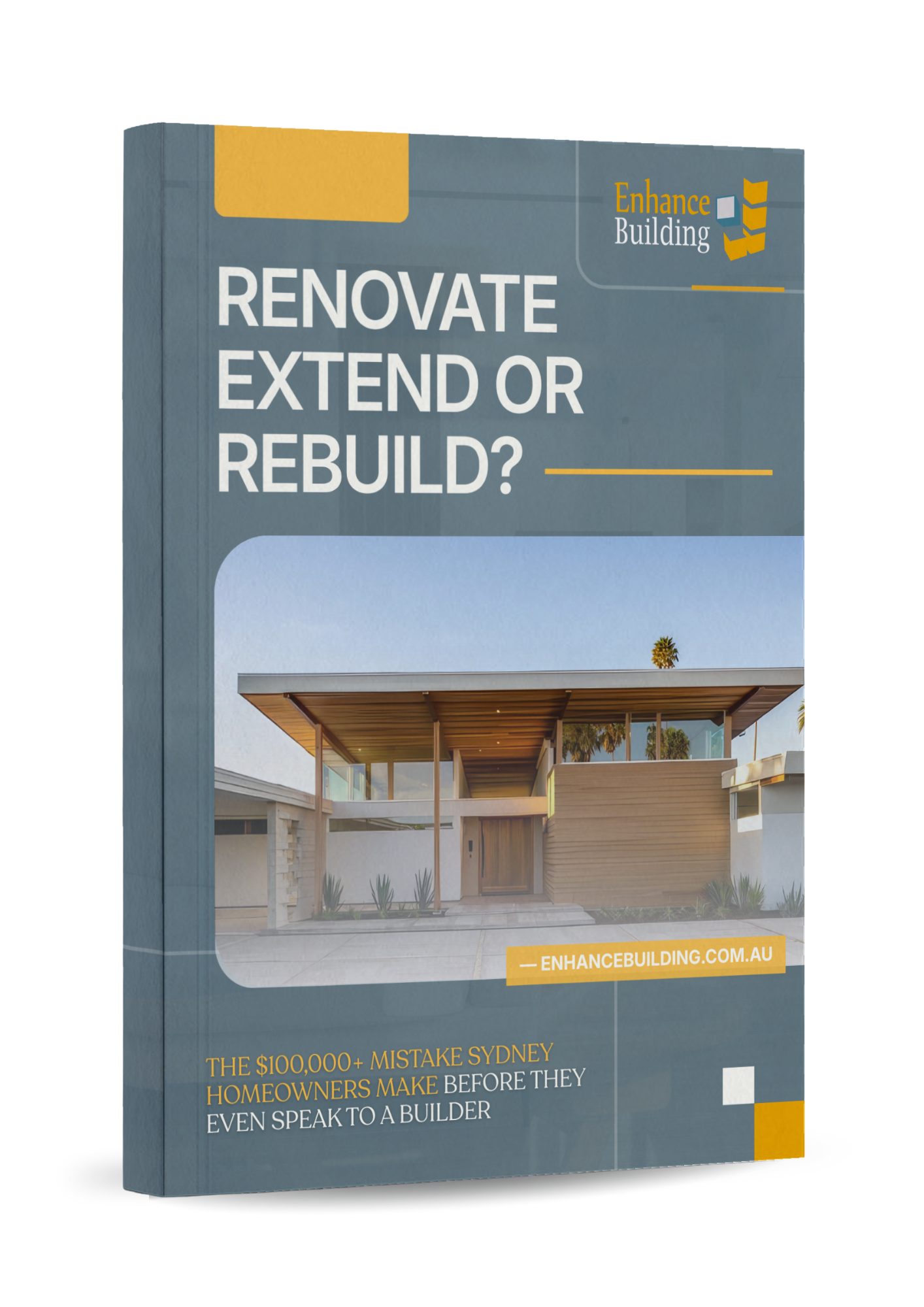
If you’re still trying to work out what the right move is, I’ve put together a free guide to help you ask the right questions before you commit:
5 Mistakes People Make When Planning A Major Home Renovation
Inside, you’ll discover:
- Why rushing decisions early usually costs more later
- What most people get wrong about living through a renovation
- Why a lot of designs never actually get built
- How to set a budget that works in the real world
- What timelines really look like once a project starts
Download your copy now, before you spend money designing a home that was never going to work in the first place.
To better understand how we approach projects and the professional standards we stand behind, feel free to explore our work and the organisations we’re aligned with, including the projects we’ve delivered and our involvement with the Association of Professional Builders.
Frequently asked questions
How do I know if a renovation is worth it?
The real question is not whether you can renovate, but whether renovating gives the best outcome for what you spend. Weigh the cost against what you are actually left with: if you keep an old structure and still have old wiring, plumbing and awkward flow, the money may be better spent rebuilding. Judge cost-effectiveness against the finished result.
When does rebuilding make more sense than renovating?
Plumbing and electrical systems have a lifecycle of roughly 40 to 60 years. When a home nears that age, cutting into it means dealing with ageing services behind the walls and under the floors, so a knockdown rebuild often makes more financial sense than patching the old structure. It is part of the thinking, not automatic.
Does keeping part of an old house actually save money?
Often not. Tying new work into an old section means working around ageing services and unknown structural issues, and that retained part still carries the same old wiring and plumbing risks. Unless heritage rules or genuine character require it, what looks like a saving at the start is frequently the part that keeps costing you. Check your obligations with NSW Fair Trading.
What should I do before spending money on plans?
Have the renovate-versus-rebuild conversation before anything gets designed. Once plans are drawn, every decision assumes renovating is the right path, which quietly locks you in. Get clear on the path first, ideally by working through the move, renovate or rebuild question, so your money follows the smartest direction.
Why do people get locked into renovating?
It starts with small, reasonable thoughts: move a wall, open up a room, go up later. Each decision feels isolated, but together they reshape a structure that may not have been designed to be reshaped, and every step builds on the assumption that renovating is right. That momentum is what makes pausing early so important.
Weighing up whether to renovate or rebuild in the St George area? Talk it through with Erwin before you commit to plans. Contact Enhance Building or call 0468 057 127.
Related Articles
Still have questions? See our full renovations and extensions FAQ.