If you’re trying to decide whether to move or renovate, the answer often starts in places you wouldn’t expect.
A homeowner once showed me a faded piece of wallpaper most people would’ve ripped out without a second thought.
It ended up changing the advice I gave her about moving house.
I was originally there to look at her flooring. The house was old, the floors were failing, and once we started talking through renovations, the conversation naturally moved towards opening up the layout and modernising the home.
Then she pointed to the wallpaper mural on the lounge room wall. It was worn around the edges and clearly old. Most people would’ve removed it without hesitation.
But for her, it reminded her of sitting in that room as a child while her father spoke to the family at the end of the day.
From that point on, the conversation shifted and we started talking about the parts of the home she couldn’t imagine losing.
It became about what parts of the home actually mattered to her.
After 30 years in construction, I’ve learned this is the part most people underestimate when they’re trying to decide whether to move or renovate.
This is especially true for families across the St George area and the suburbs surrounding Kogarah, where the decision to move is rarely just about finding another house. For many homeowners in established suburbs like Carlton, Hurstville, Oatley, Bexley, Sans Souci, Blakehurst and Ramsgate, it can also mean leaving behind school routines, neighbours, local cafés, familiar streets and the community they’ve built over many years. For homeowners slightly further afield, including parts of the Inner West south, Canterbury-Bankstown and northern Sutherland Shire, the same question often applies: is the better future found by moving somewhere new, or by improving the home and lifestyle you already have?
Before you decide whether to move or renovate, there are four more questions I think are worth answering first.
Question #1: What Would You Miss If You Left?
Most people start by looking at what the house doesn’t give them anymore.
Not enough space, poor layout, no privacy, no room to work from home, or the kids getting older while the house somehow feels smaller every year.
All valid reasons to start thinking about change.
But people often don’t think hard enough about everything outside the walls themselves. The neighbour who brings your bins in when you’re away. The café that already knows your order on Saturday morning. The route your kids walk home from school. The way you instinctively turn into your own street at the end of a long day without even thinking about it.
Those things don’t usually show up on property listings. But they’re often part of what makes a house feel like home in the first place.
I’ve seen people move into bigger homes and still feel unsettled because they underestimated how much of their life was tied to the area they left.
That’s why this decision needs more thought than simply comparing renovation costs against property prices. You’re deciding what daily life will actually look like once everything’s finished.
When weighing up whether to move or renovate, lifestyle often matters just as much as numbers on a spreadsheet.
Question #2: Which Parts Of The Home Actually Matter To You?
This is usually the part people don’t fully understand until plans start getting discussed.
Walls come down, rooms change, and layouts open up. Suddenly, parts of the home people barely noticed before start carrying emotional weight.
That’s exactly what happened with the wallpaper mural.
From a renovation perspective, removing it made complete sense. The room needed work, the home needed updating and most people would’ve looked at it as something old that needed replacing.
But for her, it carried memories that mattered far more than the wallpaper itself.
So instead of removing it, we worked around it. We framed it properly, cleaned up the surrounding wall, and preserved it as part of the renovated home.
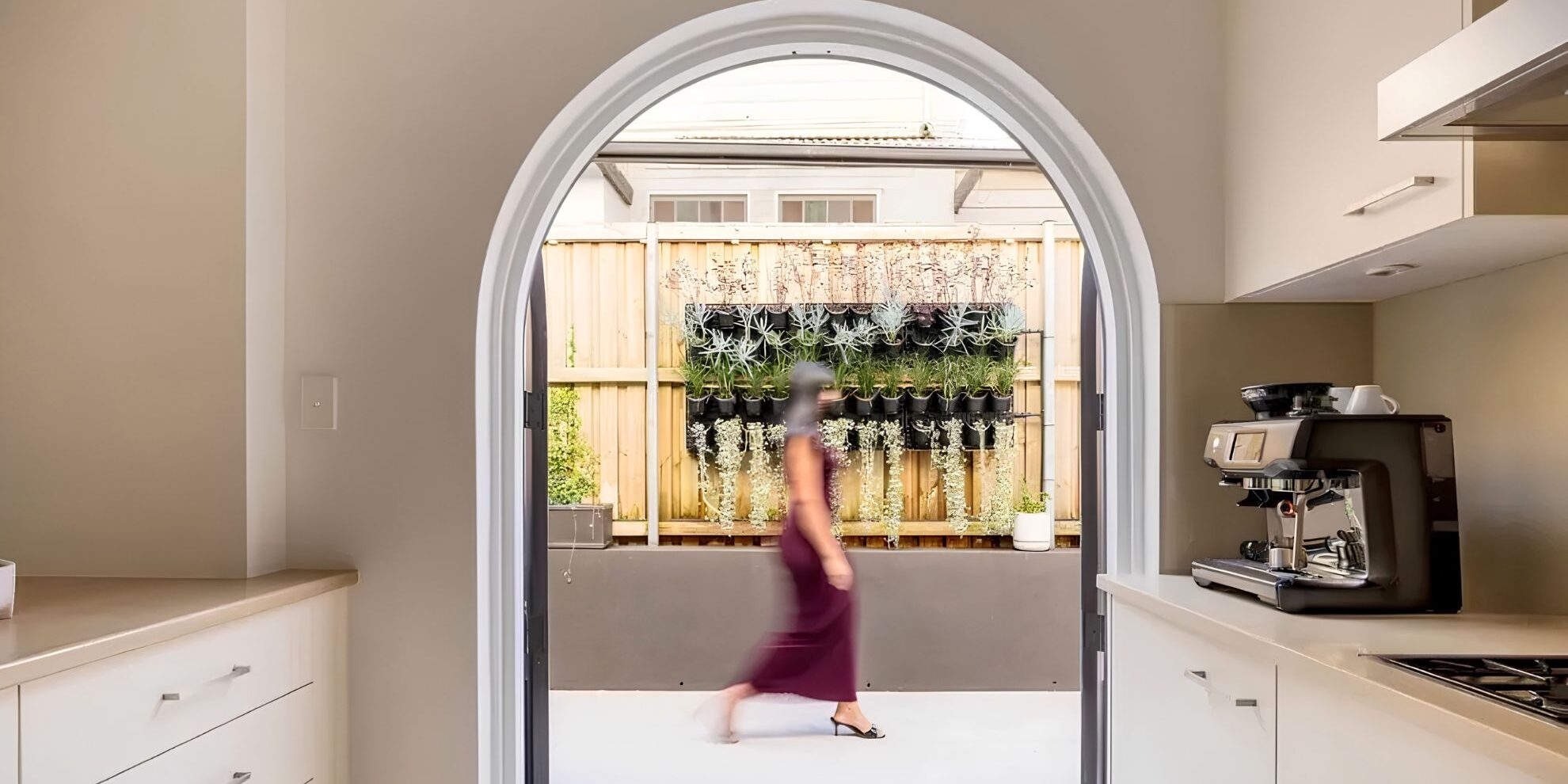
She still got the improvements she needed – new flooring, a raised roof, an updated kitchen, and more usable space. But the home still felt like hers when it was finished.
Almost every family has their own version of that wallpaper.
It could be a room, a tree in the backyard, or the way light comes through a certain window in the afternoon.
Those things don’t usually show up on plans or spreadsheets. But they’re often the parts people think about most after everything’s finished.
Question #3: Are You Looking At The Full Cost Of Moving?
When people compare renovating against moving, they usually focus on the obvious numbers first.
Sale price, purchase price, and construction cost.
But there are often a lot of other costs sitting underneath the surface that don’t get counted early enough, including stamp duty, agent fees, storage, temporary accommodation, new schools, longer commutes… and buying another house that still needed work anyway.
I’ve had conversations with clients where renovating initially sounded too expensive, right up until we unpacked what moving would actually involve once everything was counted properly. In some cases, the difference between the two options narrowed far faster than they expected.
I’ve also seen the opposite.
Sometimes the renovation required to make the home work properly no longer makes financial sense, especially when the scope becomes too large or the existing structure starts creating too many compromises.
That’s why it’s important to step back and properly assess the bigger picture before committing to one direction too early.
Because once money starts moving and plans start getting drawn, changing direction becomes a lot harder.
That’s why anyone considering whether to move or renovate needs clarity before committing financially.
Question #4: Can The Current Home Be Changed More Than You Think?
A lot of people think they’ve outgrown the home when they’ve really outgrown the layout.
I’ve walked through homes that felt small, dark, and disconnected at first, only to realise the issue wasn’t necessarily the size of the house itself, it was the way the spaces were working.
Sometimes opening up the layout completely changes how a home feels. Rooms that once felt closed off suddenly breathe again. Light reaches parts of the house that always felt dark. Spaces people avoided quietly become the places everyone naturally gathers.
Sometimes raising the ceiling height creates far more openness than people thought possible. Sometimes a modest extension gives the family enough breathing room to make the home function properly again for another 20 years.
And sometimes the right answer is recognising the home can no longer realistically support what the family needs long term.
That’s why I always think these decisions should be explored properly before committing to one direction too early.
Once people start drawings, selections, and design work, they naturally become attached to the path they’re on. At that point, stepping back becomes harder, even if another option may have created a better long-term outcome.
Before You Commit To Move or Renovate,
Get Clear On What Actually Matters
There’s no universal answer here. It depends on the property, the budget, and what the family is actually trying to build.
The decision to move or renovate is rarely just financial — it’s deeply personal.
I’ve seen people spend enormous amounts of money solving the wrong problem. Some moved when they really wanted to stay. Others renovated homes that could never realistically support the life they were trying to create. And by the time that clarity arrived, the plans were drawn, the money was committed, and reversing course was far harder than it should’ve been.
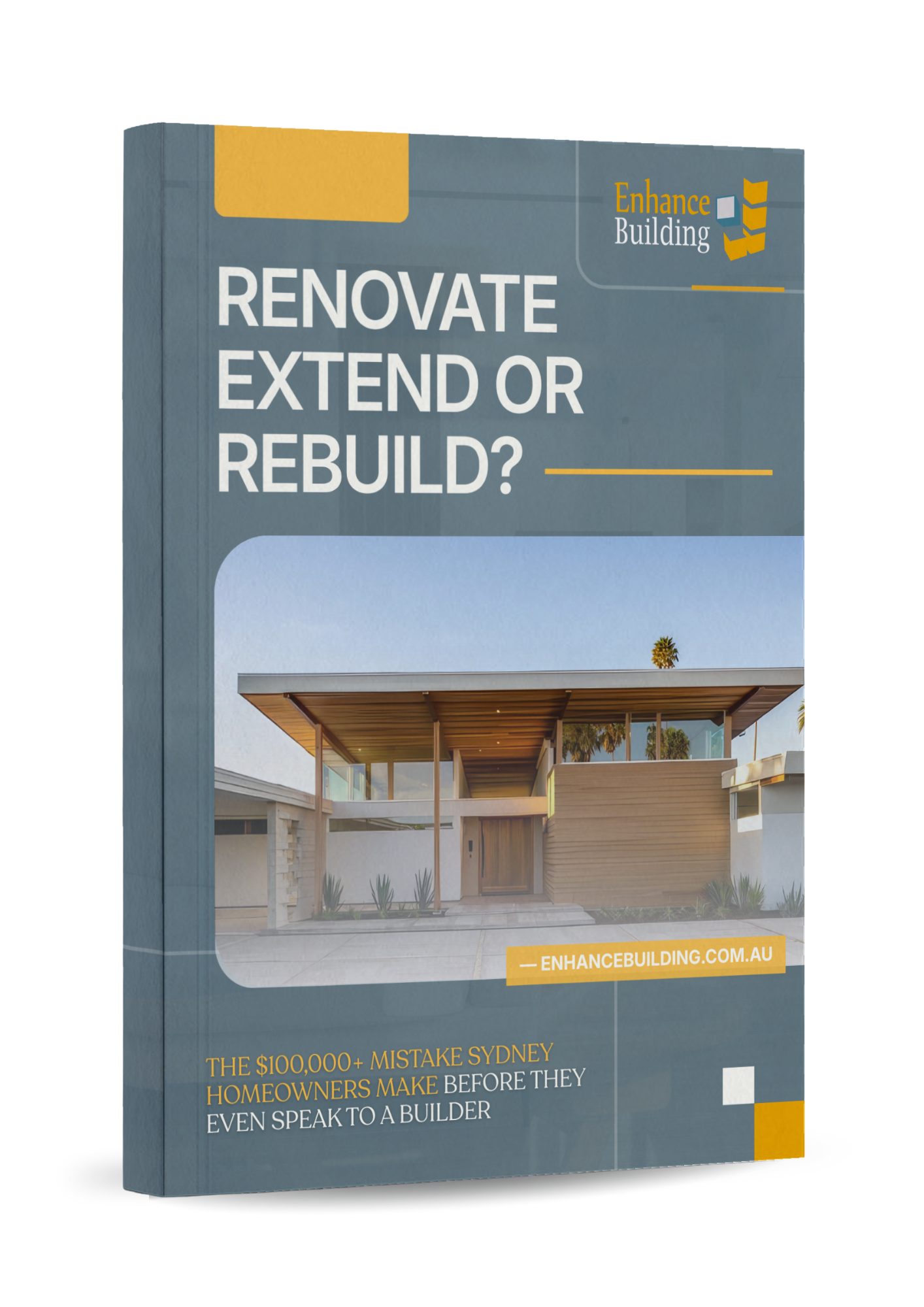
That’s exactly why I put together this free guide:
Inside, you’ll discover:
- Why rushing decisions early often creates expensive problems later
- The budgeting mistake that causes many projects to spiral
- Why so many renovation designs never actually get built
- What most people underestimate about timelines and living through construction
- And how to avoid committing to the wrong path before you’ve explored all your options
If you’re weighing up whether to move, renovate, extend or rebuild in the St George region, Kogarah, Georges River, Bayside or the surrounding suburbs, download your copy now before you commit time, money and emotion into a direction that may be much harder to change later.
To better understand how we approach projects and the professional standards we stand behind, feel free to explore our work and the organisations we’re aligned with, including the projects we’ve delivered and our involvement with the Association of Professional Builders.
Still weighing up whether to move or renovate? Talk it through with Erwin before you commit to plans or costs. Contact Enhance Building or call 0468 057 127.
Still have questions? See our full renovations and extensions FAQ.