
Most people don’t realise they’ve made the wrong decision until they’re halfway through a renovation. That’s usually when renovation regrets begin to surface.
I’ve seen people spend $200,000.00, $300,000.00, sometimes more, on something that was never going to give them a home that actually worked.
Either they should’ve knocked it down, extended differently, or they shouldn’t have touched it at all. And by that point, it’s too late.
You’ve lived through the dust, the noise, and the countless decisions. You’ve shuffled your life around a job that’s dragged on for months. You’ve made a hundred small calls trying to “get it right.”
And then you’re standing there… in a nicer version of the same problem… still frustrated, with less money in the bank…
All because you committed to an idea before you really understood what needed fixing.
“We Just Need A New Kitchen” (That’s Where It Usually Starts)
Most people come into this with a fixed idea. They tell themselves they need a new kitchen. Or one more bedroom. Or they just need to move a wall, open something up, give it a lick of paint and the house will work again. It sounds reasonable when you say it quickly, until you peel it back and realise the kitchen isn’t really the problem.
The problem is the whole house is fighting you every day.
You walk in the back door with groceries in your hands and there’s nowhere to put anything down. The laundry is jammed in the wrong spot. The bathroom only works if one person is in there at a time. The kids are getting bigger. The walls that felt fine ten years ago now make the place feel tight, dark and frustrating. You spend money making one part look better, but the feeling of the house doesn’t change. It still doesn’t work.
So yes… the kitchen might be outdated, but all you’re really doing is dressing something up that fundamentally doesn’t work.
Sometimes The House Isn’t Asking For A Renovation At All
A lot of homeowners think needing more space means they’re making a renovation decision, when in reality, they’re standing in the middle of a much bigger choice.
You’re choosing between four things:
- Renovate what you’ve got
- Extend or rework the layout
- Knock it down and start again
- Or sell and move
That’s a very different conversation to “Can you quote me for a kitchen and bathroom?”
It’s the difference between making a cosmetic change… and making a decision that affects how you live for the next 20 years.
Because now you’re not just talking about finishes and fixtures, you’re asking whether this property can still support the life you want to live in it. Whether it makes financial sense to keep feeding money into the bones of the place. Whether you still love the street, the school, the neighbours, the café you walk to on Saturday morning, the fact your parents are ten minutes away, or that your kids know the park and the route home. Or whether, deep down, you’re already halfway out the door and the house is only one part of the reason.
Those aren’t small questions. And if you don’t ask them early, they just show up later at a much bigger cost.
I’ve Seen How This Plays Out – Both Ways
Scenario 1: The “just renovate it” trap
I see this a lot with people who’ve already picked finishes and think they just need a new kitchen, bathroom, or a few walls moved. On the surface, it sounds simple. But when you walk through the house, the real issues show up in a poor layout, failing floors, and rooms in the wrong place. You can spend a lot of money making it look better, but you’re still fighting the house every day. The people who step back, explore bigger changes, and take the time to think it through end up with something completely different. Not just a nicer home, but one that actually works. Most people don’t realise the difference until they’ve already spent a big part of their budget.
Scenario 2: When “no problem” turns into a problem
On the other side, I see people go in thinking something will be straightforward because they’ve been told “yeah, no problem.” It usually looks good on paper – great location, loads of potential – but once you dig into planning, approvals, and what’s actually allowed, it’s a very different story. Suddenly there are constraints, extra costs, and risks that weren’t part of the original thinking. And by then, they’ve already committed financially and emotionally. That’s where things get tight, because your options shrink, and every change becomes more expensive.
Most people fall somewhere between these two.
Either:
- Trying to fix the wrong problem
- Or underestimating what they’re getting into
And in both cases, the outcome comes down to the same thing: the decision you make before anything starts, and how well you’ve thought it through.
A Good Result Feels Right Long After The Build Is Finished
What I’m aiming for is to get the decision right before the project starts.
When that part is right, the build has something solid underneath it. People know what they’re doing and why they’re doing it. They understand the trade-offs. They know what they’re spending, what they’re getting, and what problem they’re solving.
There’s a steadiness in that.
It’s there in the way people use the house, and how they still talk about it months later, when the dust has settled and normal life has taken over again. They’re not just happy because it looks good. They’re relieved because the house no longer rubs against their life in all the old ways.
That’s the outcome most people are really chasing, whether they say it like that or not.
Before You Start Spending, Avoid Renovation Regrets
If you’re standing in your house right now thinking something has to change, you’re probably right. But the first answer that comes into your head is often the one that sends you down the wrong path.
It might be a renovation. It might be an extension. It might be a rebuild. It might even be that the smartest move is to leave and buy something that suits you better.
The important thing is understanding which of those paths actually fits your life, your budget, and the reality of the property you own. Because once you start opening up walls, relocating services, committing money and time, everything gets more expensive to rethink.
That’s why I always come back to the same place: slow it down, pull it apart properly, and understand the problem before you start trying to solve it. That’s how you give yourself the best chance of ending up in a home that feels right when it’s all finished.
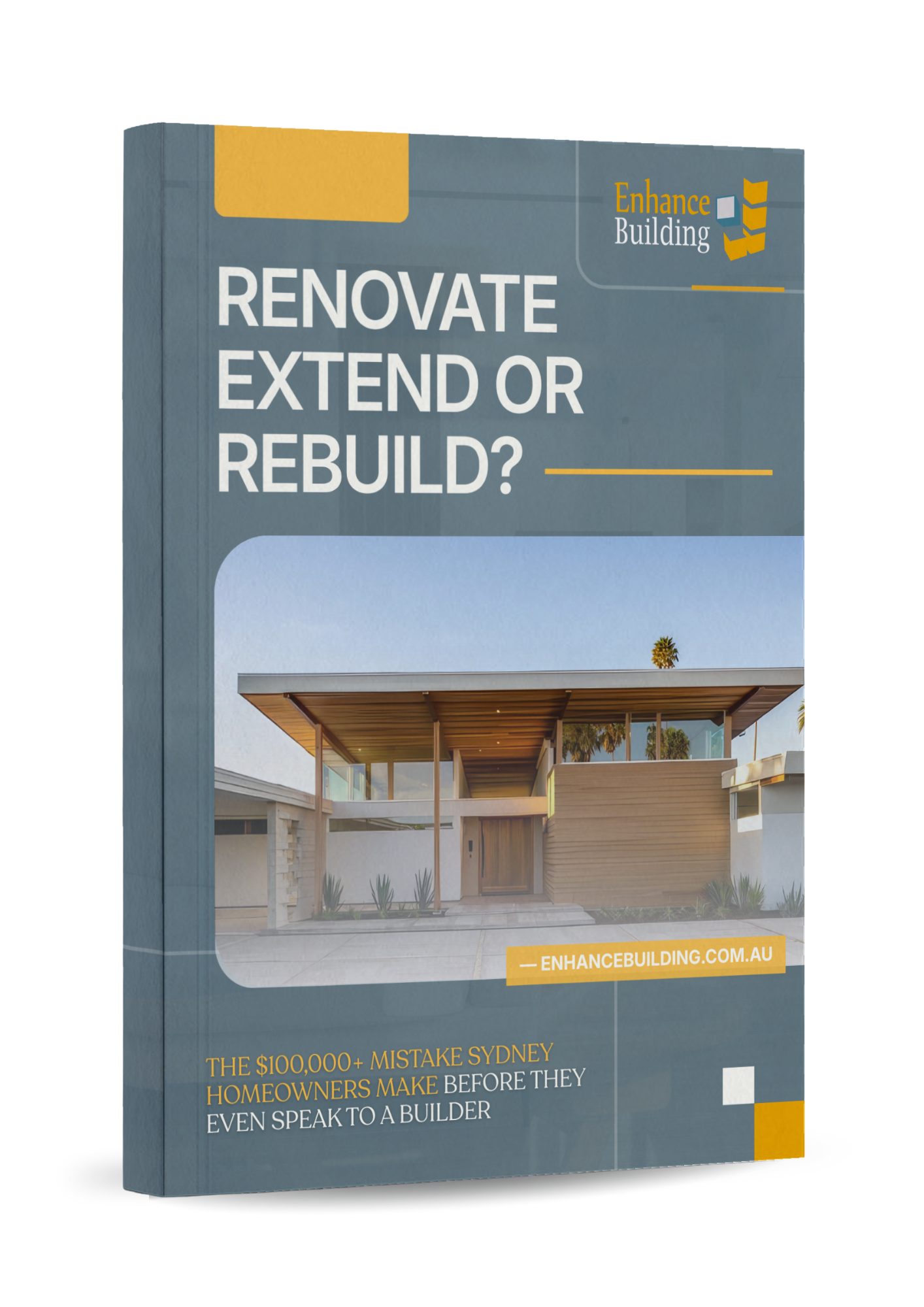
If you’re still trying to work out what the right move is, I’ve put together a free guide to help you ask the right questions and avoid spending money in the wrong direction:
5 Mistakes People Make When Planning A Major Home Renovation
Inside, you’ll discover:
- Why rushing decisions early usually costs more later
- What most people get wrong about living through a renovation
- Why a lot of designs never actually get built
- How to set a budget that works in the real world
- What timelines really look like once a project starts
Download your copy now, before renovation regrets turn your budget into a nicer version of the same problem.
To better understand how we approach projects and the professional standards we stand behind, feel free to explore our work and the organisations we’re aligned with, including the projects we’ve delivered and our involvement with the Association of Professional Builders.
Frequently asked questions
What are the most common renovation regrets?
The biggest regret is committing to an idea before understanding what actually needs fixing. People spend $200,000 or more, live through months of dust and decisions, and end up in a nicer version of the same home that still does not work, with less money in the bank. Planning the finances early with tools like MoneySmart helps avoid it.
Why isn’t a new kitchen always the answer?
Often the kitchen is not the real problem, the whole layout is. If the laundry is in the wrong spot, the bathroom only works one person at a time, and the house feels tight and dark, a new kitchen just dresses up a home that fundamentally does not work. Fixing one part rarely changes how the house lives.
What am I actually choosing between?
You are usually choosing between four paths: renovate what you have, extend or rework the layout, knock down and rebuild, or sell and move. That is a very different conversation to quoting a kitchen and bathroom, and it shapes how you live for the next 20 years. Working through the move-or-renovate question first keeps you honest.
How do I avoid renovation regret?
Ask the big questions before you spend on plans or finishes: does this property still support the life you want, and does it make financial sense to keep feeding money into the bones of the place. Working out whether a renovation is worth it up front is what separates a good result from an expensive one.
When should I rebuild or move instead of renovating?
When the home fundamentally does not work, when the cost of keeping an ageing structure alive stops adding up, or when you are already half out the door for reasons beyond the house. Running the full renovation costs against the alternatives tells you which side of the line you are on.
Not sure whether to renovate, rebuild or move in the St George area? Talk it through with Erwin before you commit to plans. Contact Enhance Building or call 0468 057 127.
Related Articles
Still have questions? See our full renovations and extensions FAQ.